








Add download to your cart
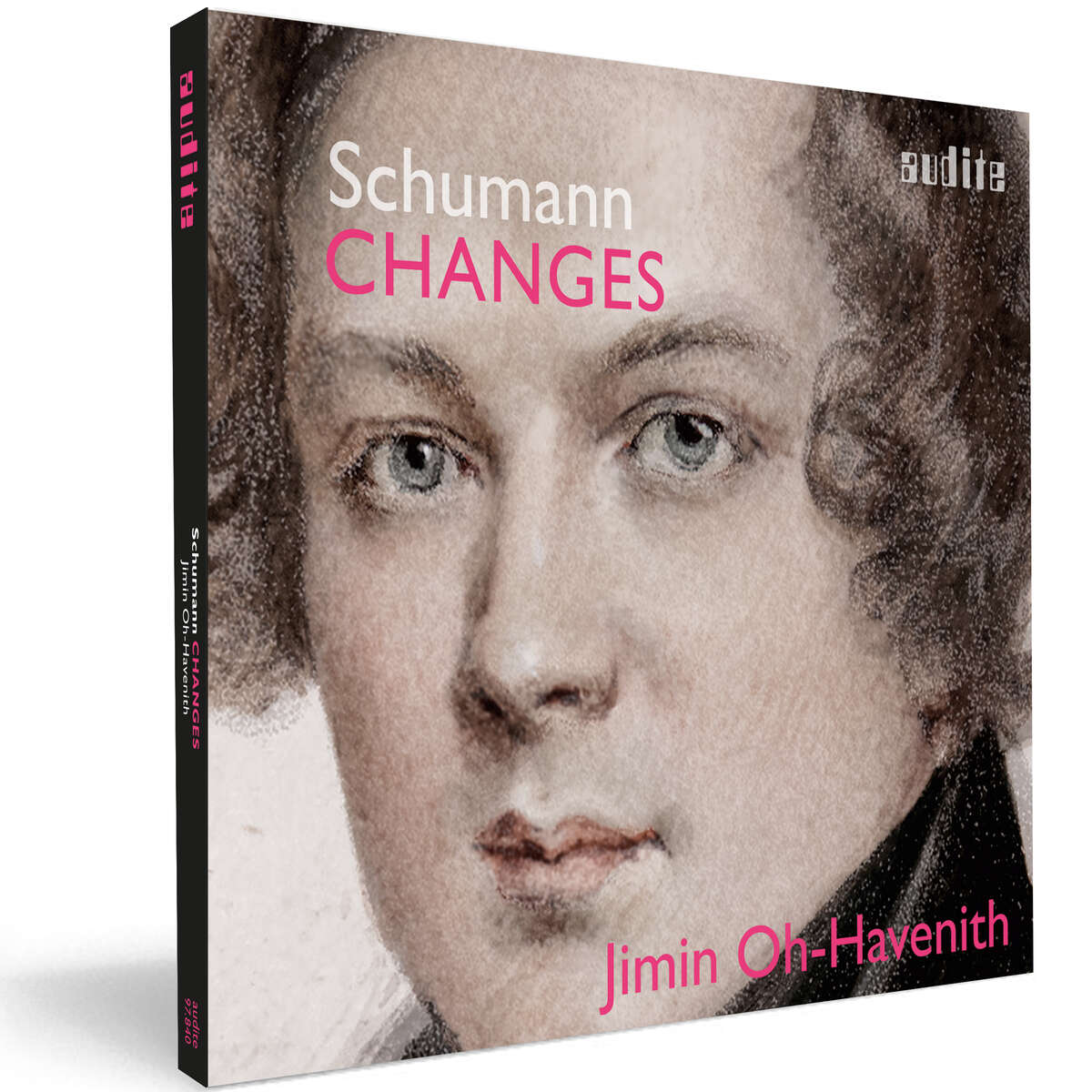
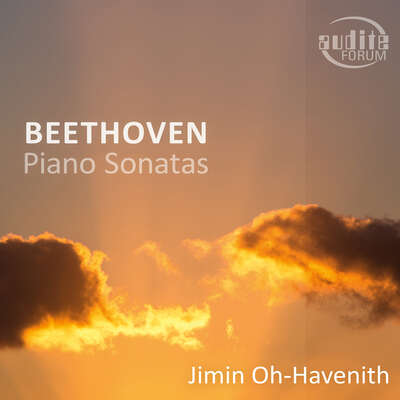
Jimin Oh-Havenith dedicates this volume of her Schumann edition to his variations, which form the beginning, the core, and the conclusion of his unique piano oeuvre.more
Robert Schumann


"The pianist’s playing is fluid and light; it comes across as spontaneous and is masterfully stylistically assured." (Pizzicato)

Track List
Robert Schumann Thème sur le nom Abegg varié pour le pianoforte, Op. 1 'Abegg Variations' (08:21) Jimin Oh-Havenith
Robert Schumann Symphonic Etudes, Op. 13, Appendix (posthumous variations) (12:23) Jimin Oh-Havenith
Details
| CHANGES | |
| article number: | 97.840 |
|---|---|
| EAN barcode: | 4022143978400 |
| price group: | BCA |
| release date: | 7. August 2026 |
| total time: | 65 min. |
Bonus Material
Informationen
In the fourth instalment of her widely acclaimed Schumann edition, Jimin Oh-Havenith turns to his works for piano in variation form. Three of the pieces recorded here occupy a singular place in Schumann's biography: both his first published composition, the Abegg Variations, and his final completed work, the so-called Ghost Variations, belong to this genre. The twelve Symphonic Etudes - situated chronologically at the heart of his piano output of the 1830s, long revered by pianists yet equally feared for their formidable technical demands - are likewise variations on a theme.
Whereas the young Schumann, in the Abegg Variations, conjured a sparkling and virtuosic play on musical letters from the name of a Heidelberg acquaintance, the Ghost Variations unfold as a deeply moving dialogue between the gravely ill composer and his great models, Schubert and Mendelssohn Bartholdy. This extraordinary breadth of expression once again affords Jimin Oh-Havenith the opportunity to demonstrate the intensity and originality of her Schumann interpretation.
Reviews

WRTI 90.1
| September 1, 2026 | Mark Pinto | September 1, 2026 | source: https://www.wrti...
BROADCAST
Sunday Classical: New Releases for September 2026
Tune in to WRTI on Sept. 6 from 3-6 p.m. to hear this month's edition of Sunday Classical: New Releases. Host Mark Pinto will play highlights from aMehr lesen
Tune in to WRTI on Sept. 6 from 3-6 p.m. to hear this month's edition of Sunday Classical: New Releases. Host Mark Pinto will play highlights from a number of recent albums, including a rhythmic release from PUBLIQuartet; an album for two saxophones featuring Otis Murphy and Masaki Tadenuma; and solo piano releases from Bruce Liu, Jimin Oh-Havenith, and Peter Donohoe.
[…] German-South Korean pianist Jimin Oh-Havenith has been honored for her deeply emotional, intellectually rigorous, and faithful interpretations of the Romantic repertoire. This fourth volume in her widely acclaimed series of Schumann recordings focuses on the composer’s works in the theme-and-variations form, beginning with his first published composition, the “Abegg Variations”, continuing with the technically formidable “Symphonic Variations”, and ending with his last completed piece, the agitated and shadowy “Ghost Variations”.
[…] German-South Korean pianist Jimin Oh-Havenith has been honored for her deeply emotional, intellectually rigorous, and faithful interpretations of the Romantic repertoire. This fourth volume in her widely acclaimed series of Schumann recordings focuses on the composer’s works in the theme-and-variations form, beginning with his first published composition, the “Abegg Variations”, continuing with the technically formidable “Symphonic Variations”, and ending with his last completed piece, the agitated and shadowy “Ghost Variations”.
Tune in to WRTI on Sept. 6 from 3-6 p.m. to hear this month's edition of Sunday Classical: New Releases. Host Mark Pinto will play highlights from a

WDR 3 | WDR 3 "Hörstoff" – neue Klassik-Alben | 10.08.2026 | Jan Ritterstaedt | August 10, 2026 | source: https://www1.wdr...
BROADCAST: WDR 3 "Hörstoff" – neue Klassik-Alben
Beeindruckende Tiefe: "Changes" mit Jimin Oh-Havenith
Jimin Oh-Havenith hat tief in die Seele Schumanns hineingeblickt. Schonungslos legt sie die vielen Brüche und Widersprüche seiner Persönlichkeit offen.Mehr lesen
Aus urheberrechtlichen Gründen dürfen wir ihnen diese Rezension leider nicht zeigen!
Jimin Oh-Havenith hat tief in die Seele Schumanns hineingeblickt. Schonungslos legt sie die vielen Brüche und Widersprüche seiner Persönlichkeit offen.

www.pizzicato.lu | 06/08/2026 | Remy Franck | August 6, 2026 | source: https://www.pizz... Spannende Schumann-Aufnahmen mit Jimin Oh-Havenith
Jimin Oh-Havenith beginnt ihr viertes Schumann-Album mit den ABEGG-Variationen. Ihre Interpretation überrascht durch ihre Frische. Das Spiel derMehr lesen
Jimin Oh-Havenith beginnt ihr viertes Schumann-Album mit den ABEGG-Variationen. Ihre Interpretation überrascht durch ihre Frische. Das Spiel der Pianistin ist flüssig und leicht, es wirkt spontan und ist in souveräner Weise stilsicher.
Die Interpretation der Symphonischen Etüden (mit Appendix) ist nicht weniger spannend. Jimin Oh-Havenith überrascht uns mit einer sehr impressionistischen, wenn nicht gar pointillistischen Interpretation. Hier gibt es kein symphonisches Aufrauschen. Ohne Schwere, ohne Pathos präsentiert sie uns ein frisch angegangenes Werk, etwa mit den hinreißend tänzerischen vierten und fünften Etüden. Die folgenden, sechs und sieben, sind alles andere als rabiat und dramatisch. Hinreißend leicht und tänzerisch wirbelt die neunte Etüde, während die zwölfte federnd leicht dahineilt, fernab jenem heroisch auftrumpfenden Charakter, den andere Interpreten diesem Stück gegeben haben.
Die Geistervariationen (Thema mit Variationen in Es-Dur für Klavier) WoO 24, komponiert 1854, sind das letzte Werk Robert Schumanns, bevor er in die Nervenheilanstalt Bonn-Endenich eingeliefert wurde. «Schumann wähnte sich in jenen Tagen von Geistern umgeben, die ihm teils ‘wundervolle’, teils ‘grässliche’ Musik darboten», notierte Clara Schumann.
Jimin Oh-Havenith spielt das Thema intim und nachdenklich. Diese introspektiven Stimmungen bleiben auch der ersten Variation erhalten, was der Musik einen schwebenden und wie flüchtigen Charakter verleiht, als könnte sie jeden Moment entschwinden. Selbst die fünfte Variation erhält bei der Pianistin keinen verspielten oder gar unruhigen Charakter.
Die Romanze op. 28/2 bekommt danach eine regelrechte Abschiedsstimmung.
-----
English translation:
Jimin Oh-Havenith opens her fourth Schumann album with the ABEGG Variations. Her interpretation is surprisingly fresh. The pianist’s playing is fluid and light; it comes across as spontaneous and is masterfully stylistically assured.
Her interpretation of the Symphonic Etudes (with Appendix) is no less compelling. Jimin Oh-Havenith surprises us with a highly impressionistic, if not pointillistic, interpretation. There is no symphonic fanfare here. Without heaviness or pathos, she presents us with a work approached with fresh eyes, as in the enchantingly dance-like fourth and fifth etudes. The following ones – the sixth and seventh – are anything but fierce and dramatic. The ninth etude whirls along with enchanting lightness and a dance-like quality, while the twelfth races along with springy lightness, far removed from the heroically triumphant character that other performers have ascribed to this piece.
The Ghost Variations (Theme with Variations in E-flat Major for Piano) WoO 24, composed in 1854, are Robert Schumann’s final work before he was admitted to the Bonn-Endenich psychiatric hospital. “Schumann believed himself to be surrounded in those days by spirits who presented him with music that was at times ‘wonderful’ and at times ‘horrible,’” Clara Schumann noted.
Jimin Oh-Havenith plays the theme in an intimate and contemplative manner. These introspective moods carry over into the first variation as well, lending the music a floating and almost fleeting character, as if it might vanish at any moment. Even the fifth variation takes on no playful or even restless character in the pianist’s hands.
The Romance, Op. 28/2, then takes on a genuine atmosphere of farewell.
Die Interpretation der Symphonischen Etüden (mit Appendix) ist nicht weniger spannend. Jimin Oh-Havenith überrascht uns mit einer sehr impressionistischen, wenn nicht gar pointillistischen Interpretation. Hier gibt es kein symphonisches Aufrauschen. Ohne Schwere, ohne Pathos präsentiert sie uns ein frisch angegangenes Werk, etwa mit den hinreißend tänzerischen vierten und fünften Etüden. Die folgenden, sechs und sieben, sind alles andere als rabiat und dramatisch. Hinreißend leicht und tänzerisch wirbelt die neunte Etüde, während die zwölfte federnd leicht dahineilt, fernab jenem heroisch auftrumpfenden Charakter, den andere Interpreten diesem Stück gegeben haben.
Die Geistervariationen (Thema mit Variationen in Es-Dur für Klavier) WoO 24, komponiert 1854, sind das letzte Werk Robert Schumanns, bevor er in die Nervenheilanstalt Bonn-Endenich eingeliefert wurde. «Schumann wähnte sich in jenen Tagen von Geistern umgeben, die ihm teils ‘wundervolle’, teils ‘grässliche’ Musik darboten», notierte Clara Schumann.
Jimin Oh-Havenith spielt das Thema intim und nachdenklich. Diese introspektiven Stimmungen bleiben auch der ersten Variation erhalten, was der Musik einen schwebenden und wie flüchtigen Charakter verleiht, als könnte sie jeden Moment entschwinden. Selbst die fünfte Variation erhält bei der Pianistin keinen verspielten oder gar unruhigen Charakter.
Die Romanze op. 28/2 bekommt danach eine regelrechte Abschiedsstimmung.
-----
English translation:
Jimin Oh-Havenith opens her fourth Schumann album with the ABEGG Variations. Her interpretation is surprisingly fresh. The pianist’s playing is fluid and light; it comes across as spontaneous and is masterfully stylistically assured.
Her interpretation of the Symphonic Etudes (with Appendix) is no less compelling. Jimin Oh-Havenith surprises us with a highly impressionistic, if not pointillistic, interpretation. There is no symphonic fanfare here. Without heaviness or pathos, she presents us with a work approached with fresh eyes, as in the enchantingly dance-like fourth and fifth etudes. The following ones – the sixth and seventh – are anything but fierce and dramatic. The ninth etude whirls along with enchanting lightness and a dance-like quality, while the twelfth races along with springy lightness, far removed from the heroically triumphant character that other performers have ascribed to this piece.
The Ghost Variations (Theme with Variations in E-flat Major for Piano) WoO 24, composed in 1854, are Robert Schumann’s final work before he was admitted to the Bonn-Endenich psychiatric hospital. “Schumann believed himself to be surrounded in those days by spirits who presented him with music that was at times ‘wonderful’ and at times ‘horrible,’” Clara Schumann noted.
Jimin Oh-Havenith plays the theme in an intimate and contemplative manner. These introspective moods carry over into the first variation as well, lending the music a floating and almost fleeting character, as if it might vanish at any moment. Even the fifth variation takes on no playful or even restless character in the pianist’s hands.
The Romance, Op. 28/2, then takes on a genuine atmosphere of farewell.
Jimin Oh-Havenith beginnt ihr viertes Schumann-Album mit den ABEGG-Variationen. Ihre Interpretation überrascht durch ihre Frische. Das Spiel der